
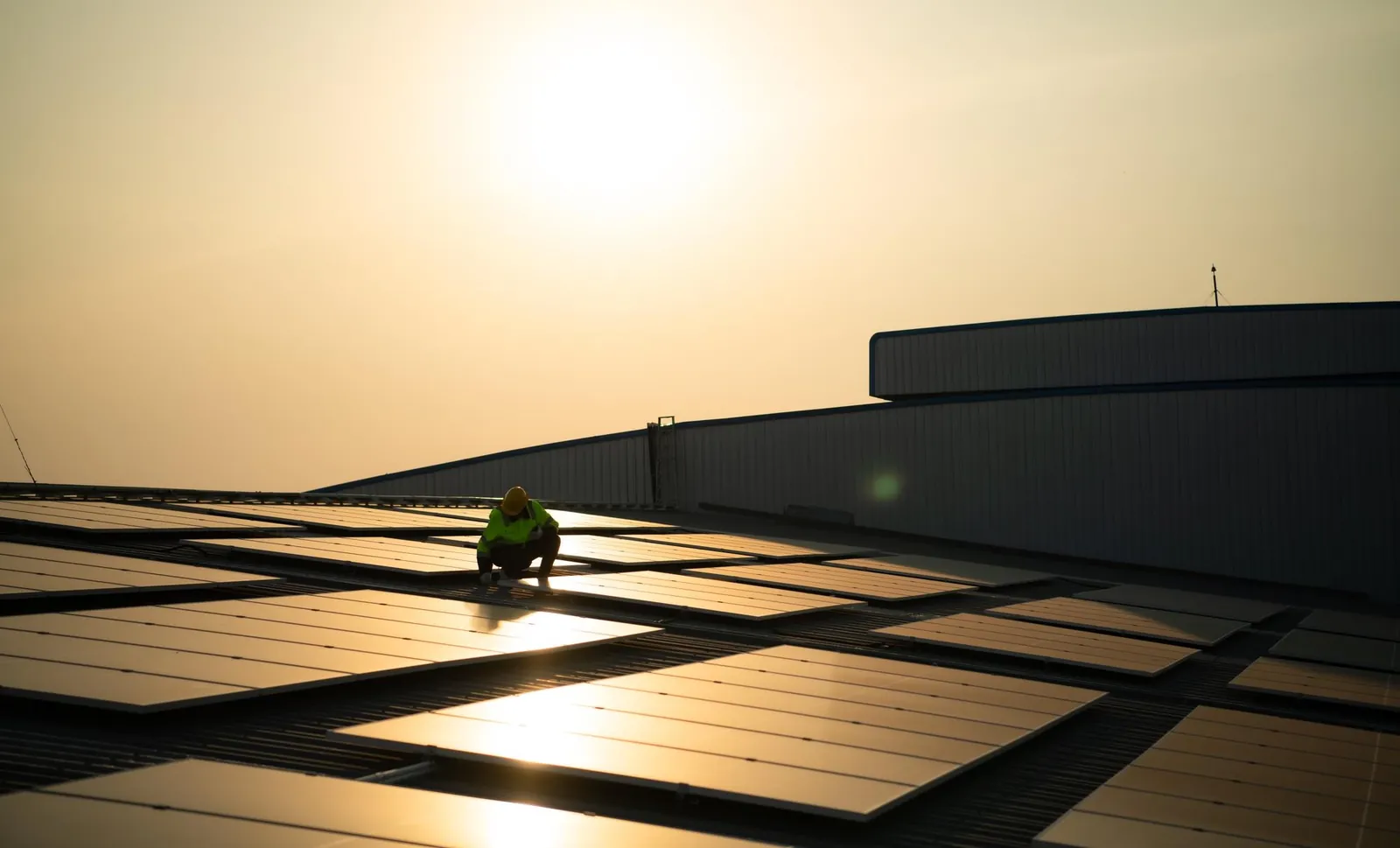
How solar works.
Solar panels turn sunlight into DC power, an inverter turns it into the AC power your home runs on, and your home uses it first. Extra power goes to the grid as credits that pay for the power you draw at night and in winter.
Simpler than your electric bill.
Your roof makes the power. Your home uses it first. The grid banks the rest. The next two minutes show you how.
4.7on 117 Google reviewsFollow the power.
Four parts, one path. Flip between day and night and watch where every watt goes.
Panels
Sunlight in, DC power out. No moving parts.
Inverter
Turns DC into the AC your home runs on.
Your Home
Runs on your own power first.
Meter & Grid
Banks your surplus. Fills your gaps.
Credit bankDaytime: your panels power the house first. The surplus spins the meter backward and banks as credits.
The inverter, three ways, and why we're picky about it
Microinverters
One small inverter under each panel, so every panel performs on its own. The right call for complex roofs and partial shade.
Power optimizers
Panel-level electronics feeding one central brain. A strong middle path: per-panel smarts, simpler service.
String inverters
One workhorse for the whole array. Simple, proven, and efficient on clean, unshaded roofs.
We're tied to no single brand or design. We engineer to your roof, and pick the inverter it actually needs. Our equipment standards
No moving parts on your roof. The only thing that moves is the number on your bill.
The grid is your bank.
Solar panels make electricity. They don't store it, and most systems don't need to. When your roof makes more than your home is using, the extra flows out to the grid, your meter runs backward, and every one of those kilowatt-hours is banked as a credit on your account.
At night, and through the short days of winter, the flow reverses: your home draws from the grid, and your banked credits pay for that power first. Long summer days fill the bank; winter draws it down. You're billed on the net, which is how a roof in the Northeast carries a home through the whole year.
Backup through an outage is a different job. That's what a battery is for.
Rules vary. Exact billing rules differ by state and utility, and they change. We've designed to every version of them since 1991, and we'll model yours exactly, free.
See what your roof could do. See your savings
Long days
The bank fills.
Your roof makes more than the house needs, and the surplus becomes credits.
Short days
The bank pays back.
The house draws from the grid, and your credits cover it first.
The questions everyone asks first.
Straight answers. Anything specific to your home goes in your quote.
Do solar panels work at night?
No. Panels need light. But your home doesn't notice: it draws from the grid, and the credits you banked during the day pay for that power first. If you want your home to keep running during an outage, that's a battery's job.
Do they work in winter and on cloudy days?
Yes. Panels run on light, not heat. Cold weather actually helps them run more efficiently, and they keep producing through cloud cover, just at a lower rate. Output dips in winter and peaks in summer, which is why we design for your whole year, not your worst week. Snow tends to slide off the smooth, tilted glass on its own.
Do panels store electricity, and do I need a battery?
Panels make power; they don't store it. The grid does the remembering: your surplus becomes credits you spend later. A battery is optional. It adds outage protection and nighttime independence, but solar saves you money with or without one.
What happens to the extra power I make?
It flows to the grid and comes back to you as credit. You're billed on the net of what you used minus what you made. The exact crediting rules vary by state and utility, so we model your address specifically before you decide anything. That part's free.
Makes sense? Now see your numbers.
Two minutes of reading is worth one real design. Tell us about your home or building and we'll model exactly what your roof can do: honest math, no pressure.
Call (518) 213-8786Free site assessment · Enphase Platinum Installer · Family-owned since 1991